
Sustaining Audience Reach on Standalone Sites Through Selective Evergreen Resource Development
Standalone sites maintain consistent audience numbers when operators prioritize the creation of resources that address ongoing user needs rather than fleeting trends, and this approach involves careful selection of topics that deliver value across multiple years while aligning with core site themes.
Identifying Topics with Long-Term Relevance
Those who manage independent websites often begin by analyzing search patterns and user queries that persist across seasons, and researchers note that subjects tied to foundational knowledge or recurring practical problems tend to attract repeat visits without requiring constant updates, whereas topics linked to current events fade quickly and demand frequent replacements.
Data from government statistical agencies shows that audiences return to sites offering guides on technical skills, health maintenance routines, or regulatory compliance frameworks, and these categories demonstrate lower bounce rates over time because users bookmark them for reference during decision-making cycles.
Building Resources with Strategic Focus
Site operators apply selective criteria when developing new pages, and they evaluate each potential resource against factors such as alignment with existing content clusters, availability of primary data sources, and potential for natural internal linking that guides visitors deeper into the site structure, and this process reduces resource waste while concentrating efforts on materials that compound in utility.
Figures released by Statistics Canada in recent years indicate that websites publishing between four and six comprehensive evergreen assets per quarter experience steadier session durations compared with those releasing higher volumes of shorter posts, and analysts attribute the difference to improved content depth that satisfies user intent more completely.
Integration with Audience Measurement Practices
Tracking tools reveal that evergreen resources contribute to sustained reach when operators monitor metrics including return visitor percentages, average pages per session, and referral patterns from external directories, and adjustments follow from these observations to refine topic selection without shifting away from the core development strategy.
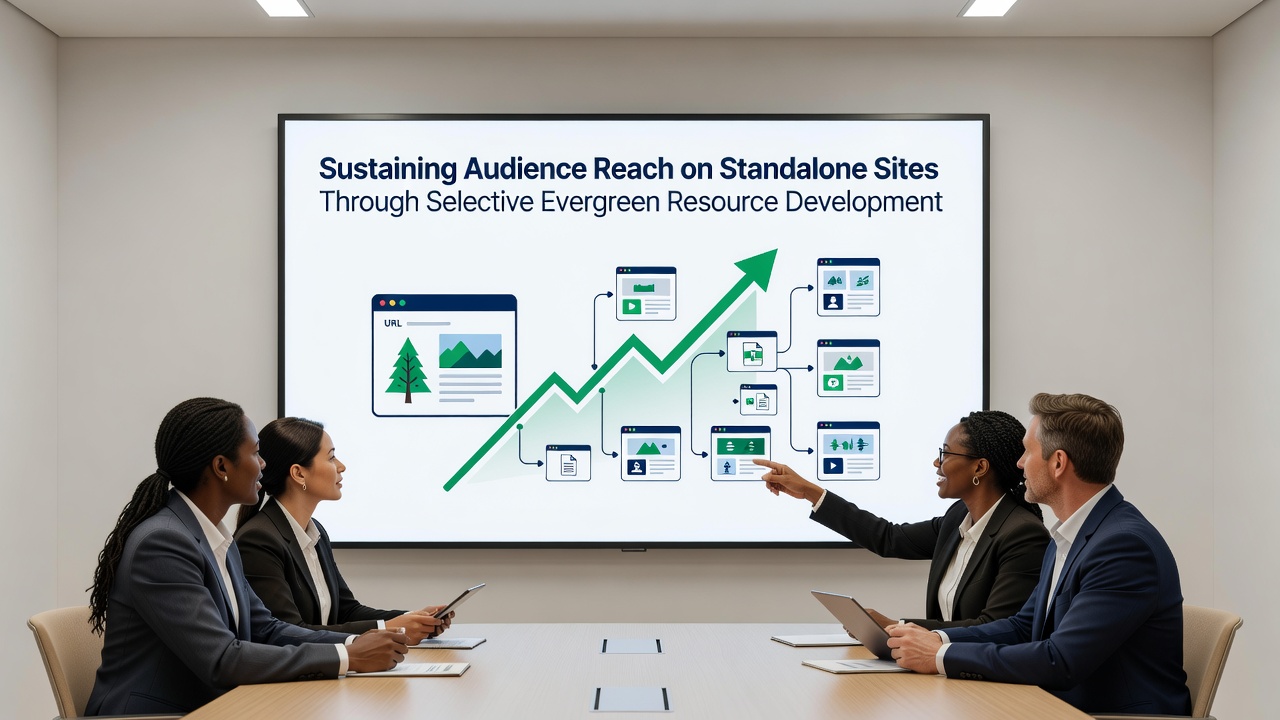
One study conducted by academic researchers at an Australian institution examined traffic patterns across fifty independent educational sites and found that selective resource development correlated with a measurable increase in organic discovery through community forums and professional networks, while sites relying primarily on time-sensitive updates showed greater volatility in monthly active users.
Adapting to Evolving Access Patterns
Platform algorithms and browser changes influence how visitors discover standalone sites, yet resources built around durable questions maintain visibility because search engines continue to surface authoritative pages that accumulate external references over extended periods, and operators who update these assets with fresh examples or clarified sections preserve ranking positions without full rewrites.
As September 2026 approaches, reports from the Australian Communications and Media Authority highlight shifts in mobile content consumption that favor structured reference materials over ephemeral updates, and site teams respond by auditing existing evergreen sections to ensure compatibility with new display formats and accessibility standards.
External partnerships sometimes amplify reach when operators contribute sections of their resources to collaborative knowledge bases maintained by industry associations, and such placements generate referral traffic that funnels back to the original standalone site for complete versions or related materials.
Conclusion
Selective development of evergreen resources provides standalone sites with a mechanism for audience retention that relies on consistent utility rather than volume of new posts, and the practice continues to evolve alongside changes in user behavior and distribution channels while remaining grounded in the selection of topics that retain relevance across multiple years.